
No products in the basket.
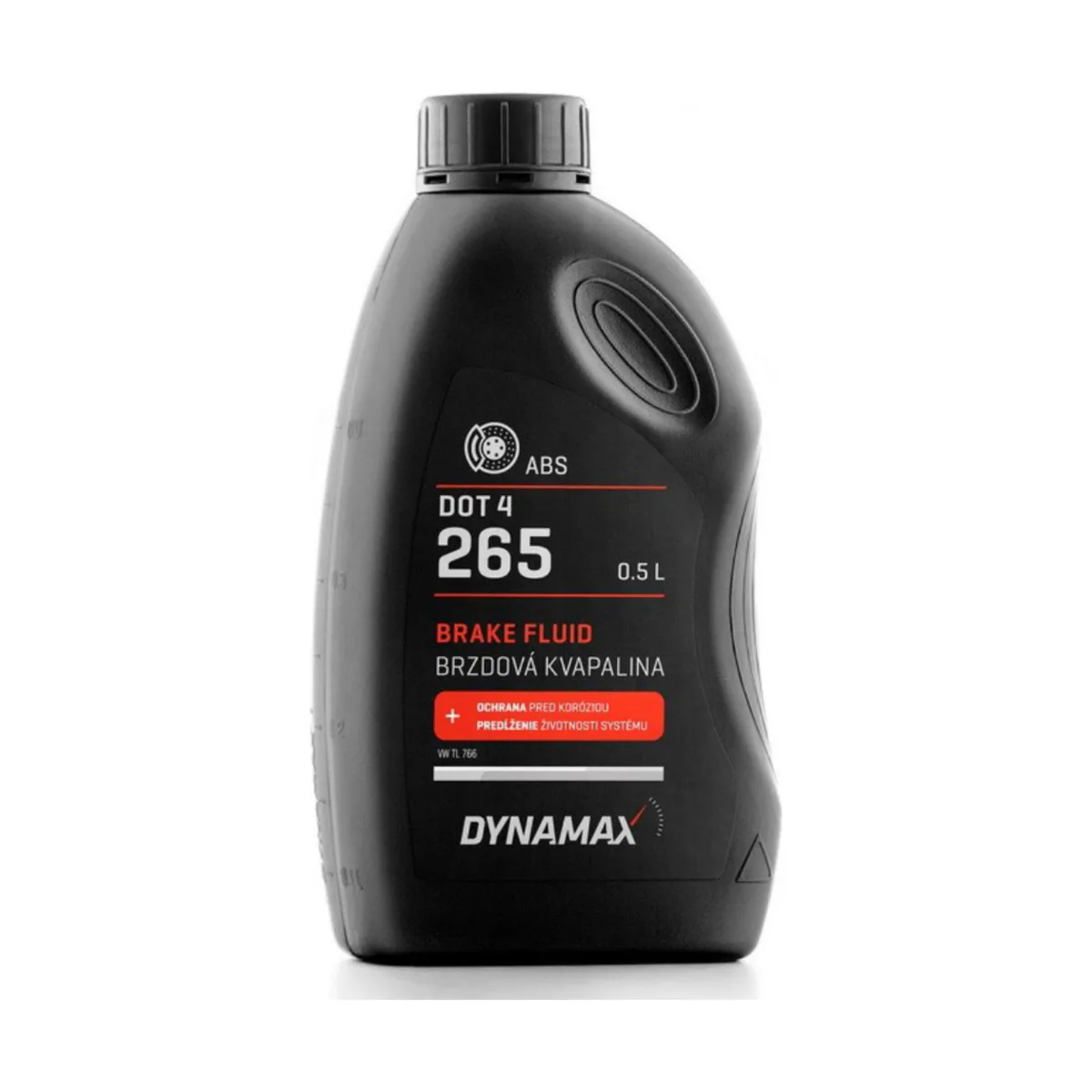

DYNAMAX DOT 4 Brake Fluid 500ml – ABS Brake Fluid, -50°C to 260°C
£5.99
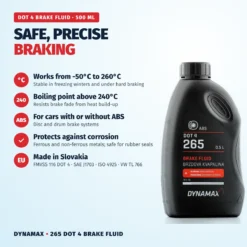
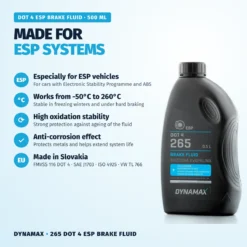
DYNAMAX DOT 4 Brake Fluid is a 500 ml high-quality brake fluid for hydraulic brake systems of cars and vans, with or without ABS. It works from -50°C to 260°C and has a boiling point above 240°C for safe, precise braking.
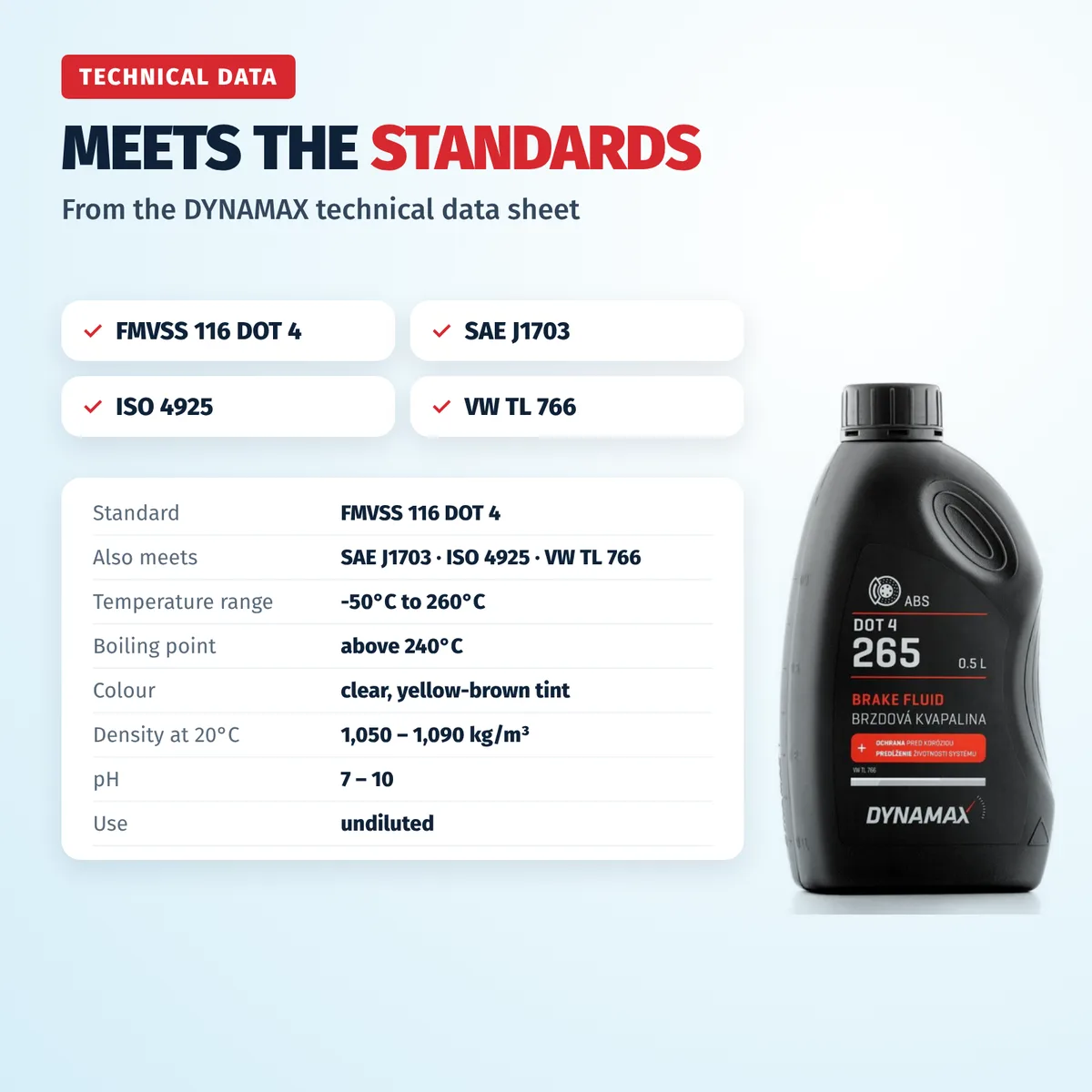
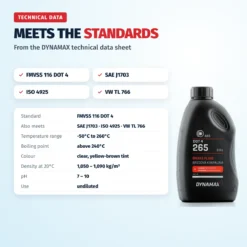
- FMVSS 116 DOT 4, SAE J1703, ISO 4925, VW TL 766
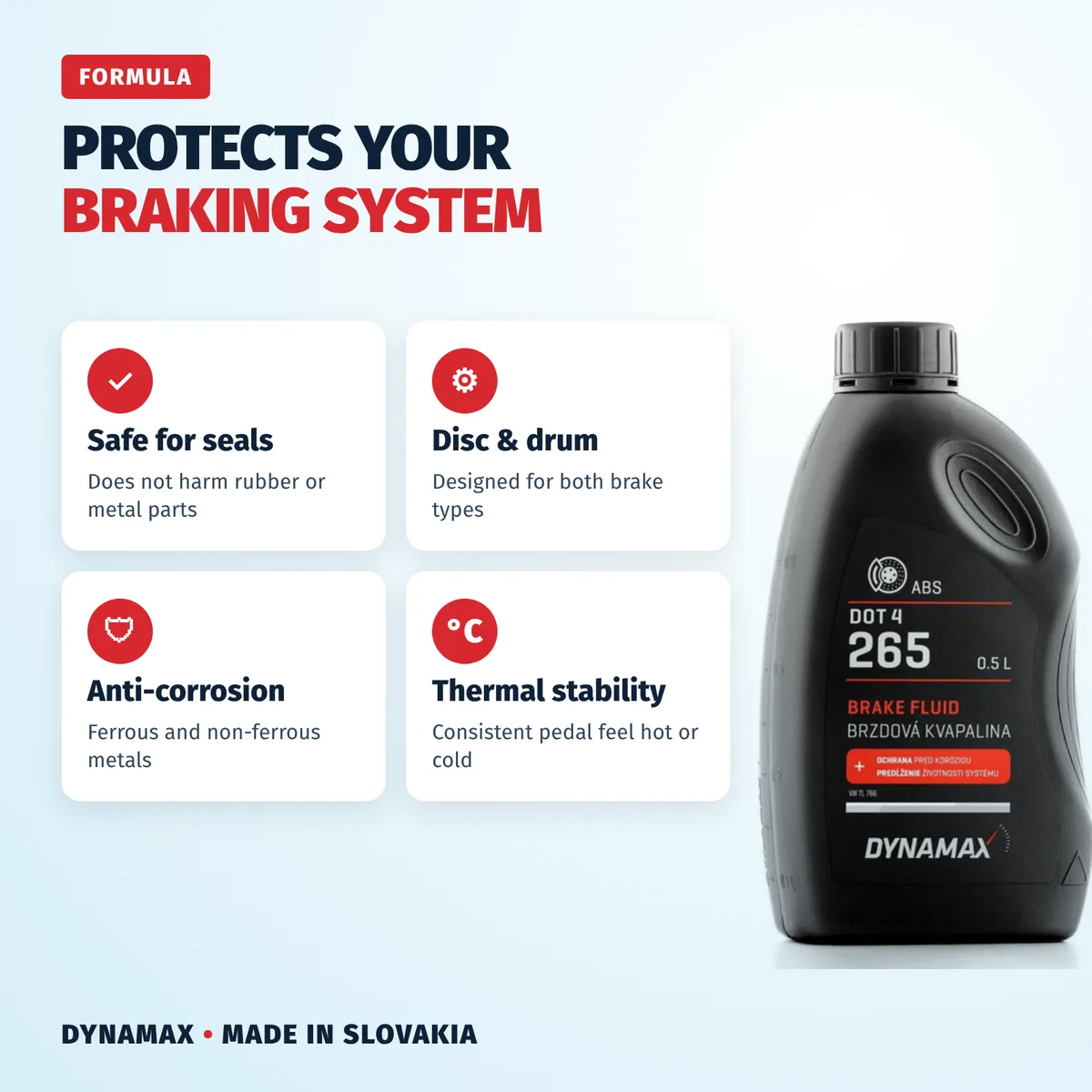
- For disc and drum brakes, with or without ABS
- Boiling point above 240°C
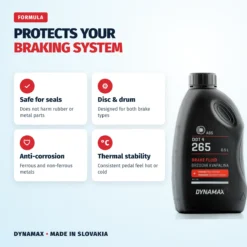
- Protects metal parts against corrosion; safe for rubber seals
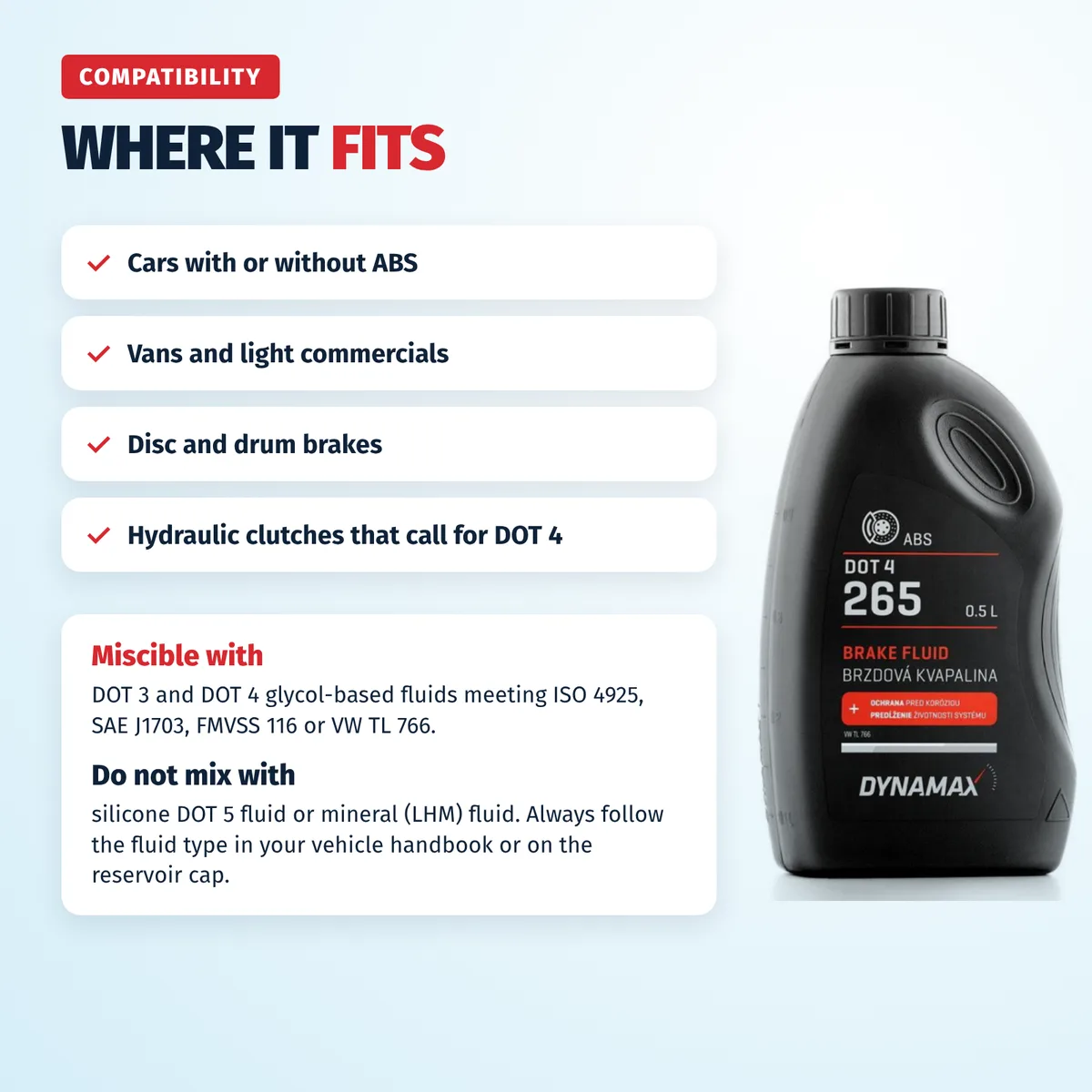
- Miscible with DOT 3 and DOT 4 fluids of the same specifications
- Made in Slovakia
In stock
DYNAMAX DOT 4 Brake Fluid is a 500 ml DOT 4 brake fluid for the hydraulic brake systems of cars, vans and light commercial vehicles, with or without ABS. It is designed to work from -50°C to 260°C, has a boiling point above 240°C and gives safe, precise braking with disc and drum brakes. It has good thermal stability, protects ferrous and non-ferrous metals against corrosion and does not harm rubber seals or metal parts.
Watch: DYNAMAX DOT 4 brake fluid
See the key benefits, technical data, compatibility and how to top up safely in this short product video.
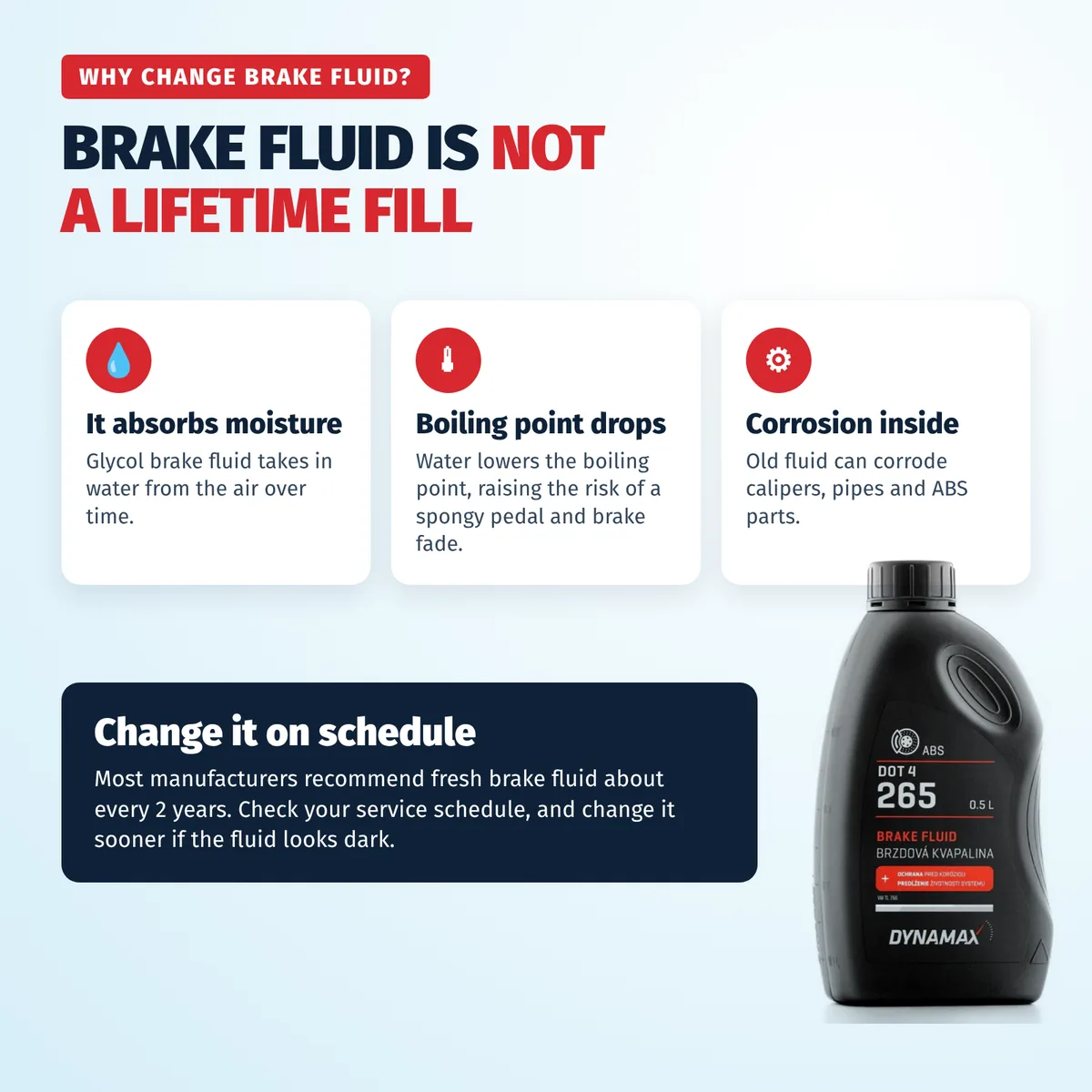
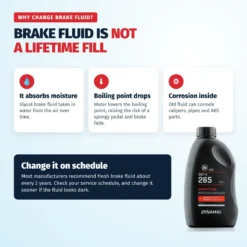
Why change your brake fluid?
Glycol-based brake fluid absorbs moisture from the air over time. Water lowers the boiling point, which can lead to a spongy pedal and brake fade under heavy braking, and it can corrode calipers, pipes and ABS parts from the inside. Brake fluid is not a lifetime fill: most vehicle manufacturers recommend changing it about every 2 years, so check your service schedule.
Key benefits
- DOT 4 to FMVSS 116, also meets SAE J1703, ISO 4925 and VW TL 766
- Wide temperature range – from -50°C to 260°C
- Boiling point above 240°C for resistance to brake fade
- For cars with or without ABS, disc and drum brakes
- Corrosion protection for ferrous and non-ferrous metals, helping extend system life
- Safe for rubber seals and metal parts
- Made in Slovakia (EU) by DYNAMAX
Compatibility
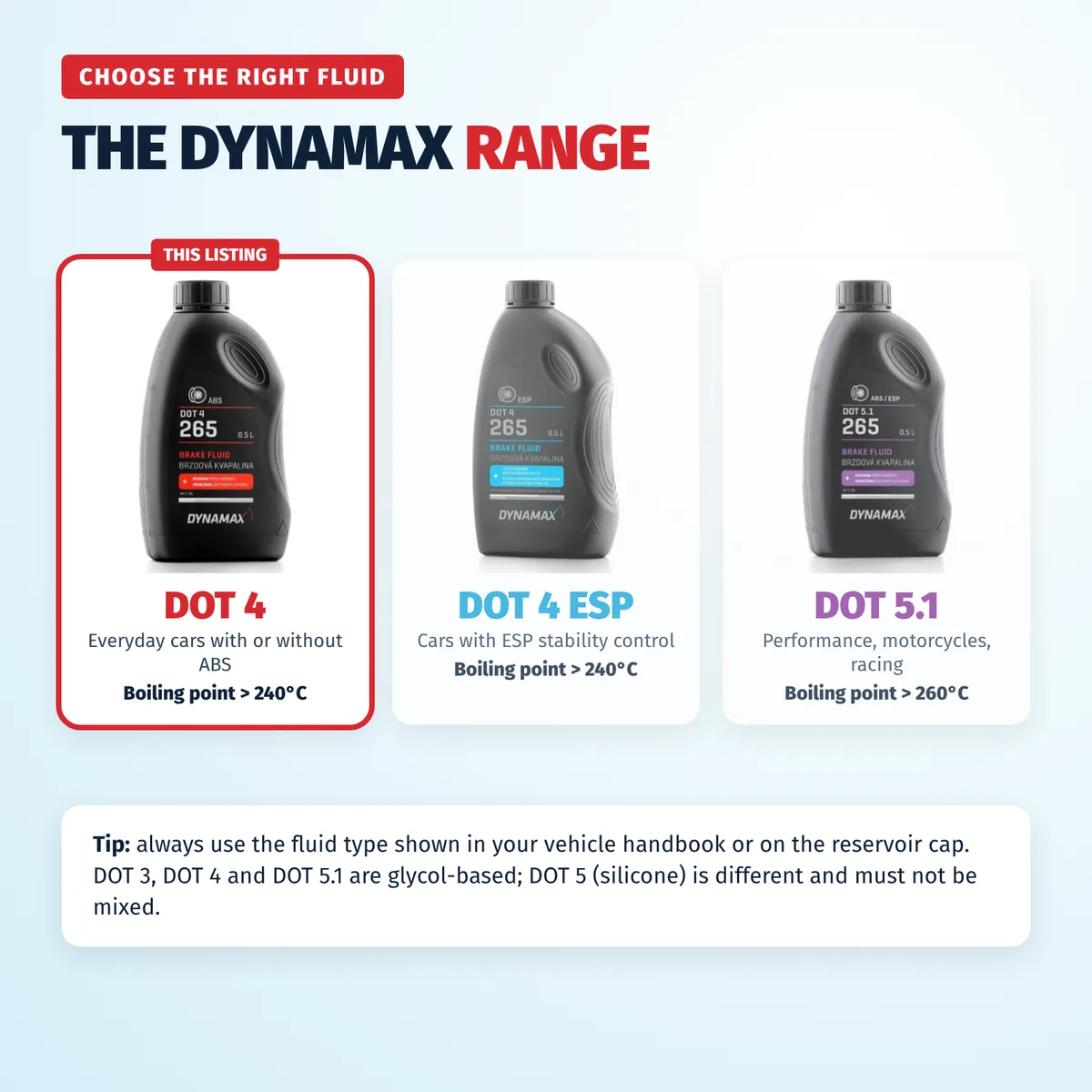
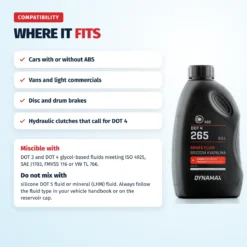
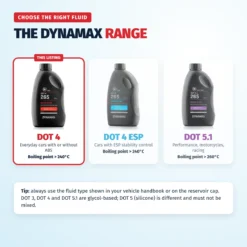
Miscible with DOT 3 and DOT 4 glycol-based brake fluids that meet ISO 4925, SAE J1703, FMVSS 116 or VW TL 766. Do not mix with silicone DOT 5 fluid or mineral (LHM) fluid. Always use the fluid type shown in your vehicle handbook or on the reservoir cap. Need ESP-specific or higher-performance fluid? See DYNAMAX DOT 4 ESP and DYNAMAX DOT 5.1.
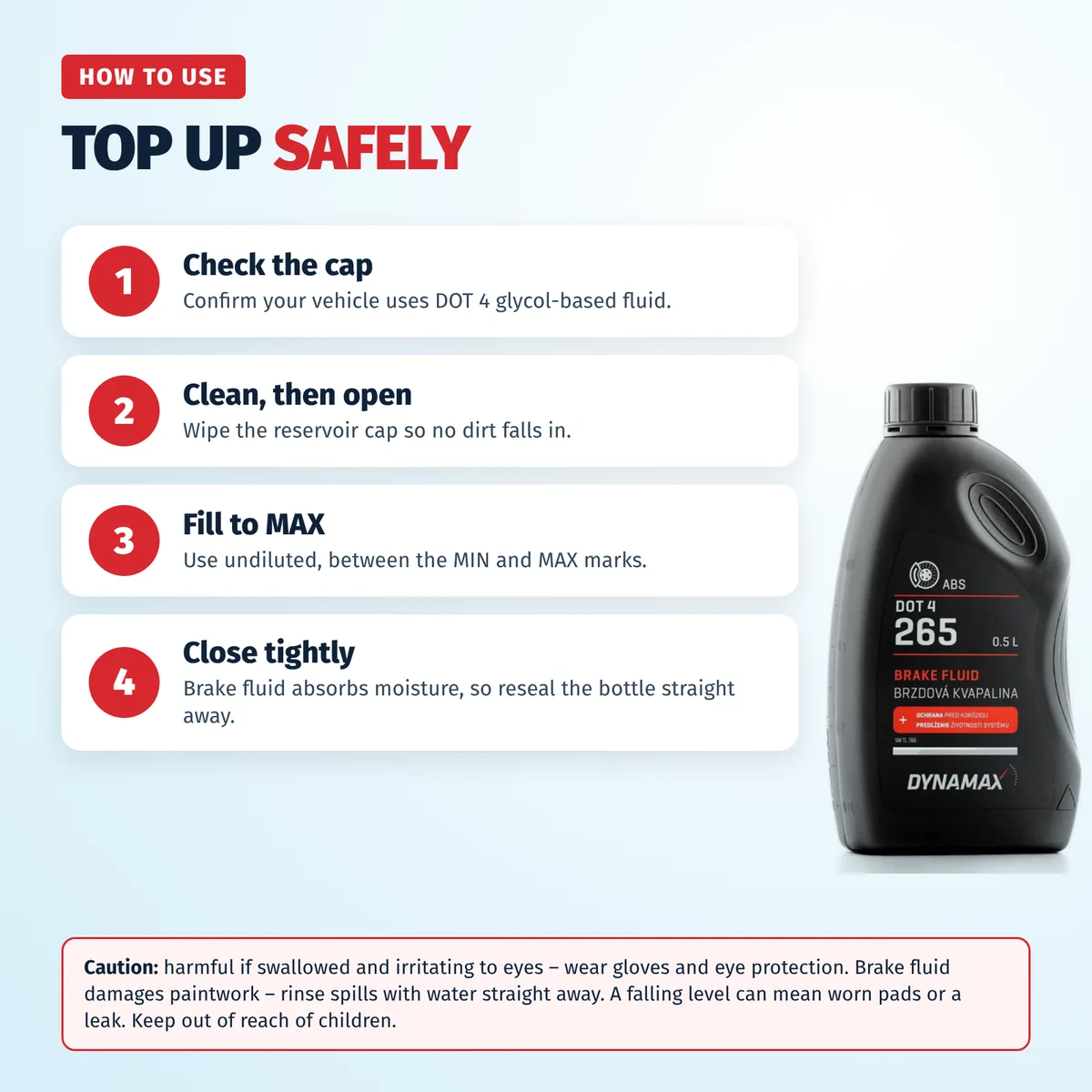
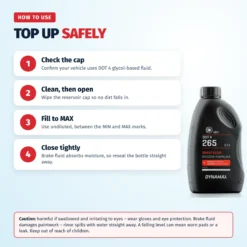
How to top up
- Check that your vehicle uses DOT 4 (or DOT 3) glycol-based fluid.
- Wipe the reservoir cap clean before opening so no dirt falls in.
- Fill undiluted, between the MIN and MAX marks.
- Close the reservoir and the bottle tightly straight away – brake fluid absorbs moisture.
Safety
According to the DYNAMAX safety data sheet (CLP), this brake fluid is labelled Warning: harmful if swallowed (H302), causes serious eye irritation (H319) and is suspected of damaging the unborn child (H361d). Wear protective gloves and eye protection, do not breathe vapour, and wash your hands after use. If in eyes, rinse cautiously with water for several minutes. Store in the original, tightly closed container up to 40°C and keep out of reach of children. Brake fluid also damages paintwork – rinse any spills with water immediately. A falling fluid level can mean worn pads or a leak; if unsure, have the brakes checked by a garage.
Specifications
| Brand | DYNAMAX |
|---|---|
| Product | DYNAMAX 265 DOT 4 brake fluid |
| Volume | 500 ml |
| Standard | FMVSS 116 DOT 4 |
| Also meets | SAE J1703, ISO 4925, VW TL 766 |
| Temperature range | -50°C to 260°C |
| Boiling point | above 240°C |
| Density at 20°C | 1,050 – 1,090 kg/m³ |
| pH | 7 – 10 |
| Colour | clear with a yellow-brown tint |
| For | cars and vans with or without ABS; disc and drum brakes |
| Hazard classification | Warning – H302, H319, H361d (see SDS) |
| Weight | 580 g |
| Made in | Slovakia (EU) |
| MPN | 501890 |
| EAN | 8586016015105 |
Manufacturer information
DYNAMAX 265 DOT 4 brake fluid is made in Slovakia by DYNAMAX. See the DYNAMAX DOT 4 brake fluid page on the manufacturer’s website, including the technical and safety data sheets.
Frequently asked questions
What is DOT 4 brake fluid?
DOT 4 is a glycol-based brake fluid standard (FMVSS 116) with a higher boiling point than DOT 3. DYNAMAX DOT 4 has a boiling point above 240°C and works from -50°C to 260°C.
Is it suitable for cars with ABS?
Yes. DYNAMAX DOT 4 is suitable for cars and vans with or without ABS, with disc or drum brakes.
Can I mix DOT 4 with DOT 3?
Yes. It is miscible with DOT 3 and DOT 4 glycol-based fluids that meet ISO 4925, SAE J1703, FMVSS 116 or VW TL 766. Never mix it with silicone DOT 5 or mineral (LHM) fluid.
How often should brake fluid be changed?
Most vehicle manufacturers recommend about every 2 years, because brake fluid absorbs moisture that lowers its boiling point. Always follow your vehicle service schedule.
Is 500ml enough?
A 500 ml bottle is ideal for topping up. A full brake fluid change on a typical car often needs around 1 litre, so you may need two bottles – check your vehicle data.
Does brake fluid damage paint?
Yes. Brake fluid harms paintwork, so wipe up and rinse any spills with water straight away.
Is DYNAMAX DOT 4 hazardous?
Yes. The safety data sheet classifies it as harmful if swallowed, an eye irritant and suspected of damaging the unborn child. Wear gloves and eye protection and keep it away from children.
| Weight | 580 g |
|---|
Be the first to review “DYNAMAX DOT 4 Brake Fluid 500ml – ABS Brake Fluid, -50°C to 260°C”
Related products

Sale!

Original price was: £10.99.£7.99Current price is: £7.99.

Sale!
Original price was: £15.99.£10.99Current price is: £10.99.
This product has multiple variants. The options may be chosen on the product page
Reviews
There are no reviews yet.